How-to guide

How to remove stains from white clothes.

Rinse the stain from the back with cold water, treat it before it dries, then wash on the warmest cycle the care label allows and air dry — never tumble dry a stain you have not fully removed. Heat sets protein and food stains permanently, so the drying step matters as much as the wash.

Reviewed July 2026 · By the Xtra Kleen team

Step by step.

  1. 1

    Act while the stain is wet

    Blot — never rub — with a clean cloth to lift the excess. Rubbing pushes the stain deeper into the weave and spreads it across a wider area.

  2. 2

    Flush from the back

    Hold the fabric with the reverse side up and run cold water through it. This pushes the stain back out the way it came instead of through the fibres.

  3. 3

    Pre-treat and let it sit

    Work a paste of laundry powder and water, or a dedicated stain remover, into the mark and leave it 15 to 30 minutes. Do not let it dry out on the fabric.

  4. 4

    Wash at the warmest safe temperature

    Check the care label, then wash whites together on the warmest cycle the fabric allows with a full dose of powder. Cold water alone struggles with oil and body soil.

  5. 5

    Check before drying

    Inspect the garment wet. If any mark remains, repeat the treatment. A tumble dryer or hot sun will bake a partial stain in permanently.

Stain-by-stain quick reference.

  • Sweat and deodorant yellowing: soak in warm water with bicarbonate of soda for an hour before washing.
  • Tea, coffee and red wine: flush immediately with cold water, then pre-treat with detergent paste.
  • Grease and oil: cover with bicarb or cornflour to absorb, brush off, then treat with dishwashing liquid before washing.
  • Blood and other protein stains: cold water only — warm water sets them permanently.
  • Ink: dab from the back with isopropyl alcohol over a clean towel, replacing the towel as it takes up the ink.
  • Grass: pre-treat with detergent, then wash warm; avoid bleach on blends until you have tested a hidden seam.

Using bleach on whites safely.

Bleach works on white cotton and linen, but check the care label first — it damages wool, silk, elastane and many blends. Dilute it, never apply neat to fabric, and never combine it with vinegar, ammonia or acidic cleaners.

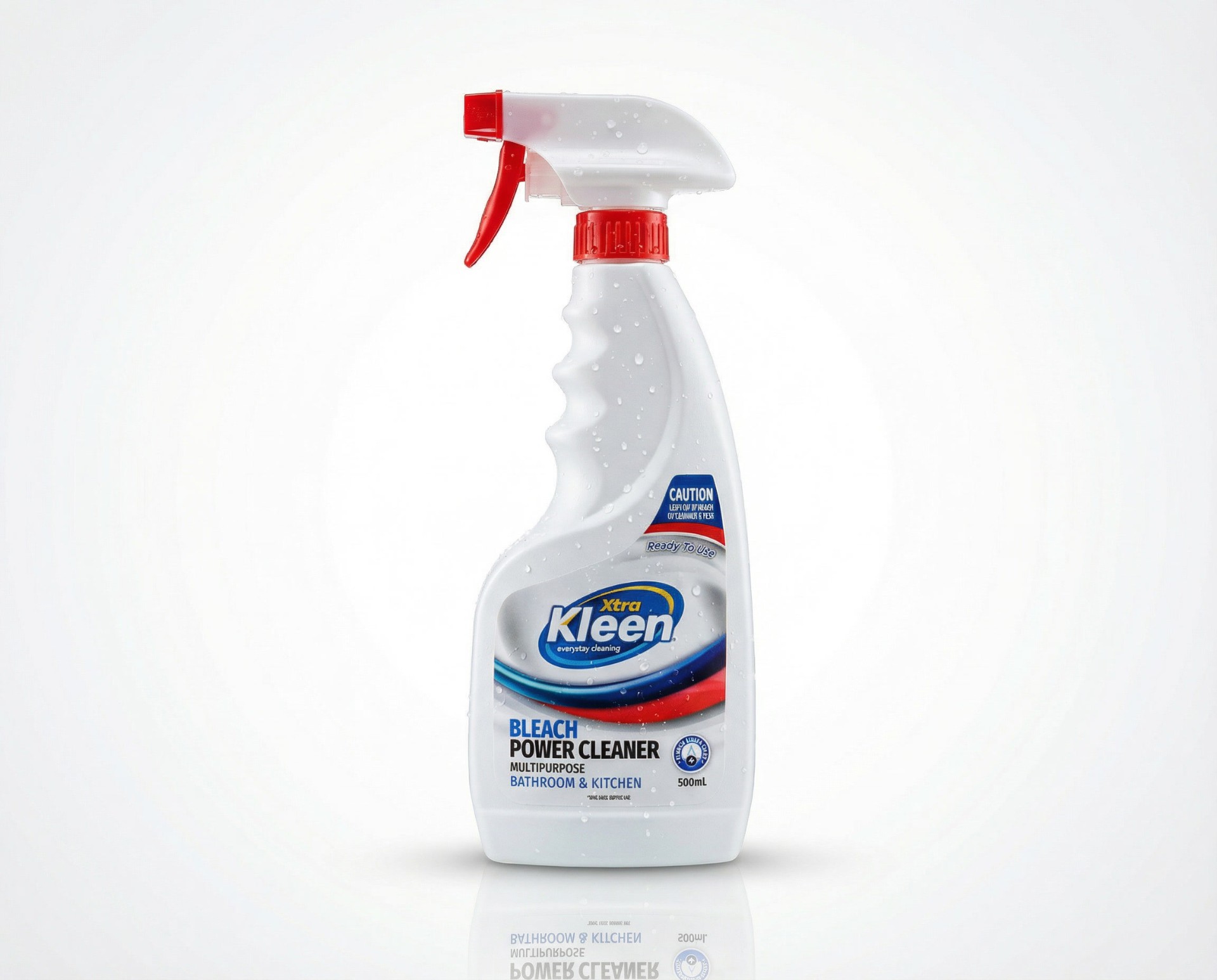
Xtra Kleen Bleach Power Cleaner Multipurpose Spray 500ml (item 324217) is a surface cleaner for tiles, grout and hard surfaces, not a laundry additive. Use a laundry-specific bleach for clothing.

Why whites go grey (and how to fix it).

  • Overloading the machine: clothes need room to move for soil to rinse away.
  • Washing whites with colours: even one grey sock will dull a full load.
  • Too much detergent: excess powder builds up in fibres and dulls the fabric.
  • Hard water: mineral deposits leave a film — a monthly hot maintenance wash helps.
  • Cold-only washing: run whites warm regularly to shift body oils.

The fastest safe way to brighten dull whites.

Soak the load overnight in a bucket of warm water with a scoop of laundry powder and half a cup of bicarbonate of soda, then wash on the warmest cycle the label allows and line dry in direct sunlight. Sunlight is a genuinely effective natural brightener on white cotton, and it costs nothing.

Questions people also ask.

Does hot water set stains?

It depends on the stain. Heat permanently sets protein stains such as blood, egg and dairy, so use cold water for those. Oil, grease and general body soil come out better in warm water, which is why the care label and stain type both matter.
How do I get yellow underarm stains out of white shirts?

Soak the shirt for an hour in warm water with bicarbonate of soda, scrub the area gently with a paste of powder and water, then wash on the warmest cycle the label allows and line dry in sunlight. Repeat before drying if any yellowing is left.

Can I use vinegar and bleach together on whites?

No — never. Mixing bleach with vinegar or any acid releases hazardous chlorine gas. Choose one, rinse the garment thoroughly, and keep the two products completely separate in both laundry and cleaning routines.

Is it too late once a stain has been through the dryer?

Not always, but it is much harder. Re-wet the area, pre-treat it and let it sit for an hour, then rewash warm and air dry. Set-in stains often need two or three cycles of treatment and will not always come out fully.

More answers on the Xtra Kleen FAQ page.

Products mentioned.